Easily comparable to Dead Poet’s Society, Time Stands Still illustrates the excitement and torment of teenage adolescence. Instead of young men dealing with the expectations of overbearing parents and high society however, the characters of Time Stand Stillcombat growing up in a repressive socialist regime. The film follows Dini and his older brother Gabor about 7 years after their father fled Hungary as a political exile during the 1956 revolution. Amid stunning visuals and playful use of popular music, the film showcases brotherhood, sex, mentorship, and rebellion all under a tense political atmosphere.
In one of the beginning scenes, Dini locks eyes with his love interest, Magda, from across the room as Paul Anka’s “You Are My Destiny” plays. The scene is dramatic and playful, with sexual tension in the air. Much of the film takes place in this school, highlighting the difference between Soviet order and teenage rebellion. Pierre, one of Gabor’s friends, is idolized at the school for his cool persona and rebellious tendencies. Pierre makes a mockery of a school speech praising the Soviets for crushing the 1956 revolution and ultimately gets kicked out of school for it.
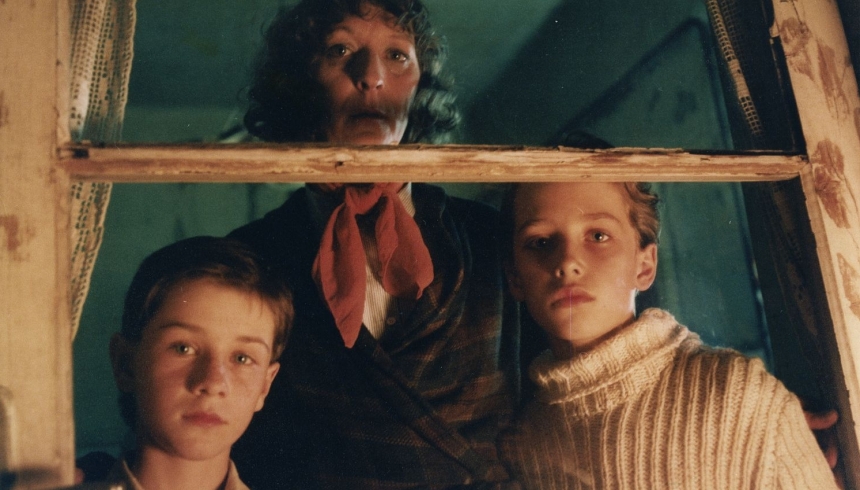
In a school that’s supposed to be a model for communist education, there are power struggles and disagreements on the proper teaching of students. Dini, who first finds mentorship in his teacher, takes the advice of a former revolutionary to trust no one and keep his thoughts to himself. The movie perfectly captures the mental state of Dini who is yearning for independence but at the same time young, alone, and confused. The scenes are filmed in a dreamlike state, some scenes electric and others dark and foreboding. The audience sees the world as Dini does; every moment feeling intense and important.
The film is a clear criticism of the communist state at the time. Gabor is unable to attend college due to his father’s actions. The school can’t keep order among its students or its faculty. In every scene, there’s a feeling as if someone is watching. The government’s presence is looming and only in hushed tones can the characters express their true thoughts. The students yearn for independence and freedom, knowing this is something they’ll never truly achieve.
Like Dead Poet’s Society, the film focuses on the joys of male adolescence as well. Inappropriate jokes are cracked left and right in the school halls. Sex always seems to be on everyone’s minds. In one joyous scene, Dini and his classmates gather in a schoolroom and chant their teacher’s name like an anthem. In another, boys run down the school hallways to Elvis’s “Jailhouse Rock” while trashing everything they pass. The lighter moments of the film show a nostalgia and love for the country. Three silhouettes sit against a sunset in a scene so picturesque it makes your heart ache. The film depicts a Hungary that despite its flaws, its people cherish.
The highlight of Time Stands Stillis the cinematography. The film is exquisitely shot to be dark, moody, and dusty. The visuals are entrancing and help distract from the sometimes hard to follow plotline. Raw emotion is so easily conveyed from the shots alone dialogue feels unneeded at moments. The characters are complex and a tad strange, but incredibly endearing nonetheless. Dini is someone both the audience roots for and their hearts break for. The script may lack at times and there’s more nudity than the American audience may enjoy, but the film is nonetheless rewarding. Time Stands Stillelevates the typical coming of age story and will leave one dissecting every deeper meaning and replaying every scene.
Directed by Péter Gothár, 1982, Hungary

 Budapest through Streets, People and Cinema