Stories have long been used to show something about the world by holding up the proverbial mirror to it. Sometimes this message is hidden by the fictional world created that only resembles the world we live in. One Day (Egy Nap), Zsofia Szilagi’s 2018 film takes the idea of a mirror to society to the extreme, as its world does not just resemble ours, it’s practically identical. The film presents an almost uncomfortably real account of motherhood in a twenty-first century urban setting to show the struggles of juggling the responsibilities involved with being a working mother today.
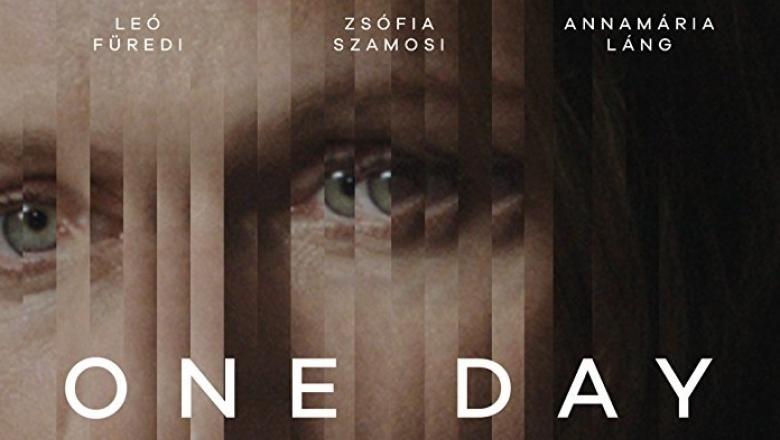
As the title implies, One Day depicts a little over one day in the life of Anna, an Italian teacher, wife, and mother of three in Budapest as she juggles her usual responsibilities. Her responsibilities range from calling the bank about missed payments to dealing with usual troubles of children including illnesses, forgetfulness, and bullying. Behind this seemingly mundane plot is the plot of her husband Szabolcs’s affair with her friend Gabi. At the start of the film, Gabi assures Anna the affair is over despite her being in love with Szabolcs, and Szabolcs refuses to deny his feelings but also assures Anna that nothing had happened. This lasts until the next morning when Szabolcs tells Anna that he will be meeting with Gabi later that day, after which he admits to sleeping with her when he returns. The affair subplot, which could be argued as the main plot because of its importance to the film, is only explicitly mentioned in a couple scenes, yet it clearly affects Anna’s behavior throughout the film.
The film is remarkably authentic and realistic, so much so that it is easy to mistake it for a documentary. There is seemingly no real soundtrack or score except for a few instances when Anna listens to music in the car. Instead, Mate Balogh’s soundtrack for the film is composed of sounds of an urban environment like Budapest, such as cars and horns. The effect of this decision is a more realistic feel to the film and a heightened sense of immersion into the world. Dialogue is also used in the way a score would. Almost all of the dialogue is irrelevant in the sense that it has no bearing on the plot or main themes of the film. The main purpose of most of the dialogue is to fill the emptiness with sounds that sound like the real world. We can see this in the scene where the family is having breakfast when Simon, Anna’s older son, describes an experiment he had learned about while Sari, Anna’s daughter, calls his experiment stupid. This bit of conversation has no actual bearing on the film but helps make this scene look like a normal family breakfast. Even though the dialogue is irrelevant, this scene still shows relevant information about Anna and Szabolcs’s relationship through their body language and the few words they speak to each other. Considering meaningless banter is more typical of a conversation than provocative prose, the dialogue makes the scene relatable and authentic. The great script is accompanied by excellent performances by the cast as well. Zsofia Szamosi delivers an accurate yet gripping performance as Anna, in which she portrays the stress and frustration perfectly without exaggerating or overdoing it. While the rest of the cast did not get the same screen time as Szamosi, their performances were real in that they made Anna’s interactions feel familiar, as if they could have happened in the audience’s life.
While the attention to detail and great performances elevated the film for me, I did not like the way they chose to end the film. The morning after Szabolcs tells Anna about sleeping with Gabi, she stays home sick and chooses to avoid her responsibilities by hiding under a table when a plumber arrives to fix their sink. It is empowering as it shows that after being a slave to her roles and the responsibilities associated with those roles, she decides to ignore those and be happy. After seeing the frustration of her life which offers her little reward for her efforts, the audience is relieved by her willingness to free herself from the routine. This is a fairly common ending in stories, but to me it took away from the realism of the rest of the film. Many women live similar lives to Anna’s, but they are not given the option to hide from their responsibilities. The film conveniently depicts only one day in Anna’s life, but her life must go on and she must eventually confront her problems, as people do every day. I felt this ending was more of a fantasy ending where people can choose to ignore their problems and be happy, and I was disappointed because the effort put into making the film so authentic and relatable felt wasted. I would have preferred an ending where her life continued more or less the same because that is closer to reality, as disappointing as that may seem.
Besides the ending, the film was a masterful depiction of motherhood in the twenty-first century. Being a mother is among the only sources of joy in Anna’s life, yet it is also among the biggest reasons for stress and frustration. Today the concept of work-life balance is gradually disappearing compared to days of old, and this leads to working mothers everywhere finding it ever harder to fit the traditional role of the mother in this reduced time. While the film may have just been a way to honor mothers like Anna for their sacrifices, I interpreted the film as being a criticism of our society where families are put in a similar position all the time, suggesting that a societal rethinking may be required. Regardless of the takeaway, One Day does a great job depicting the challenges people like Anna face not just one day, but every day.

 Budapest through Streets, People and Cinema
A+ title
LikeLiked by 1 person