The animated film “Ruben Brandt, Collector”, written and directed by Milorad Krstic, captures its audience with unique and bold imagery. Ruben, a psychotherapist specializing in treating his patients with artistic methods, experiences his own psychiatric issues as he has recurring dreams that characters from famous paintings come to life and torment him. In order to cure his suffering, Ruben and a team of his own psychiatric patients set out to steal each painting appearing in his dreams. As we follow the thrilling adventures of this team, who at first seemed to be a group of malformed misfits, they develop into lovable characters who embody pieces of artwork themselves. Every character has their own unique appearance and personality, just like the artwork they are stealing.
Inspired by idea of representing the characters and images of the film as pieces art themselves, I decided to transform the characters and images of the film to represent the style of the famous paintings which appear in the film. Using a Neural Style Transfer from deepart.io, I was able to take images from the film itself and apply the style of the paintings seen in the film. The details of a Neural Style Transfer are a bit of a black box, but in short it uses neural networks to apply the styling of one image to the content of another. More specifically, it takes the high-level features of the “style image” (stroke type, color scheme, etc.) and the low-level features of the “content image” (general shapes, general shading, etc.) and combines them to create a new image. The new image now has the low-level features representing the content of the content image, but the high-level features representing the style of the style image.
After applying this technique to a few images from the film, I was very pleased with the result. Not only did the result transform the characters from the film into pieces of art, but they also exemplified themes seen throughout the film. In the following sequence of images, I will show the two images I combined, and the result. With each image I will give brief comments on why I specifically chose to put these to images of art together, and what I took away from the result.
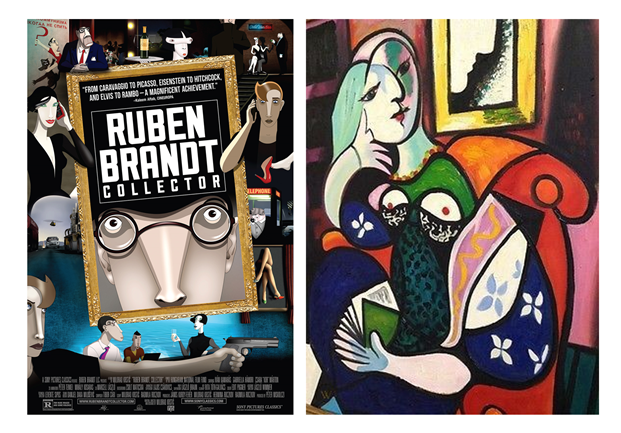
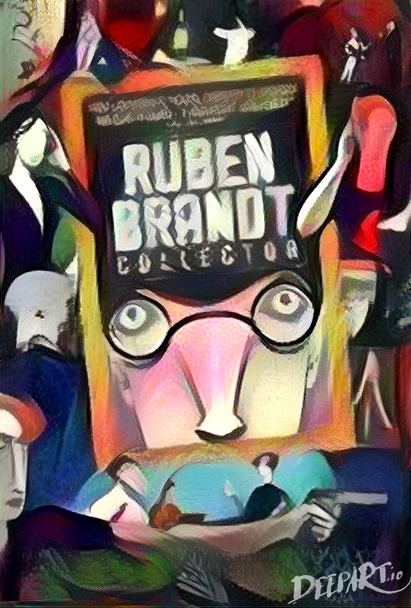
Before diving into images of the film, this combination gives an idea of what the style transfer process does. Here you can see the poster from the film with the style from Pablo Picasso’s Women with Book. Notice how the characters and even most of the words remain in the image, but now the color scheme and strokes of the image represent that of the Picasso painting. The characters in the poster shift from rigid two-dimensional characters to smooth and colorful characters reflecting the women in the Picasso image. Noticing that the poster itself attempts to frame Ruben as a piece of art, I was immediately pleased with the transfer result because it even more so enhances the idea that Ruben is trapped in the artwork.
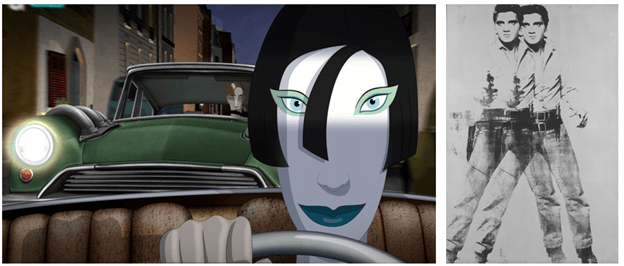
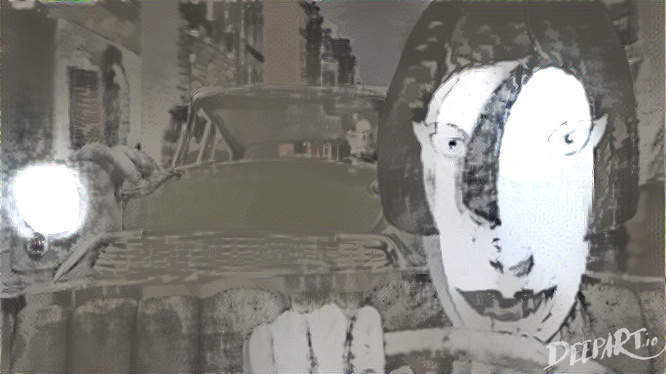
This combination gives the style of Andy Warhol’s Elvis I, II to a scene of a car chase early in the film. I chose to combine these two images because the of the noir-like aspects of both images. The shadows and car chase of the image from the film reminded me of classic noir film you might have seen in the 1950s, when Elvis I, II was completed. Furthermore, the framing of the faces of the characters side by side in the image reflect the “seeing doble” theme of Elvis I, II. The resulting image gives the scene of the film an even more noir-like feel, with bright black and white contrast and a character now lurking even more in the shadows.
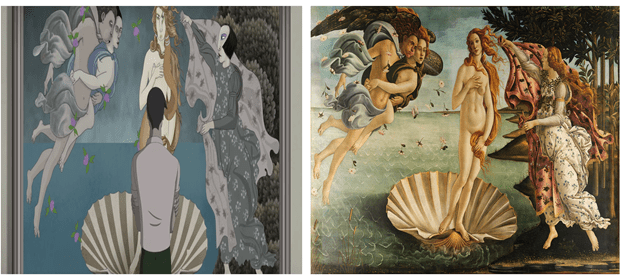
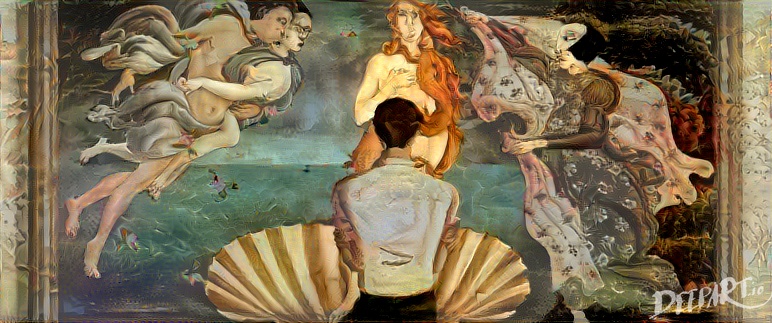
Combing these two images was a rather easy decision, as in the film Ruben is literally staring at Sandro Botticelli’s Birth of Venus moments before experiencing the painting coming to life. With the combination of these two images, rather than bringing the characters of the painting out of the frame, I was able to bring Ruben into the frame. Giving him the same style as the painting he is staring at reduces the contrast between the piece of art and his character. It quite literally represents Ruben as somehow connected with the painting and its characters, while also enhancing the theme seen throughout the film that the characters are pieces of artwork themselves.
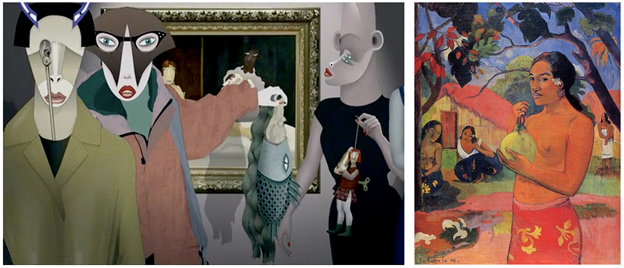
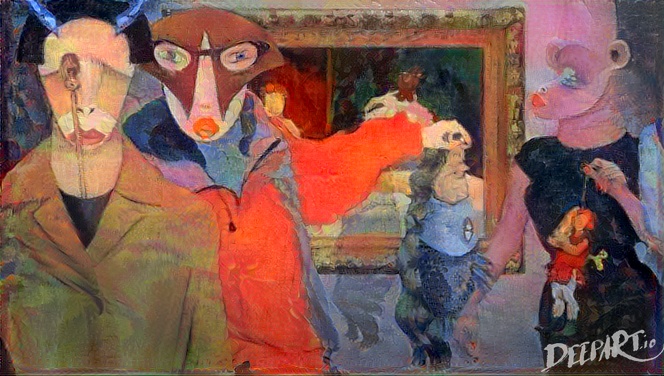
Although this image from the movie actually contains Édouard Manet’s Olympia, I chose to apply the style of Paul Gauguin Woman Holding Fruit because at first glance the image from the movie actually reminded me of this painting. Firstly, they both contain a woman holding something, whether it be a fruit or fish, staring outside of the frame as if they are looking directly at the audience. These characters both first captured my attention before I noticed the other subjects of each image. In the resulting image, I was very pleased with the vibrant colors of the woman holding the fish and the fish itself. I thought this combination brought this image to life and highlighted the especially perplexing content of the already odd image.
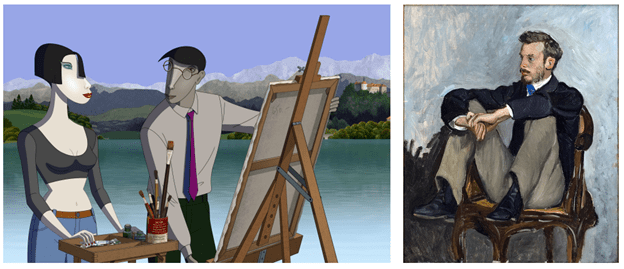
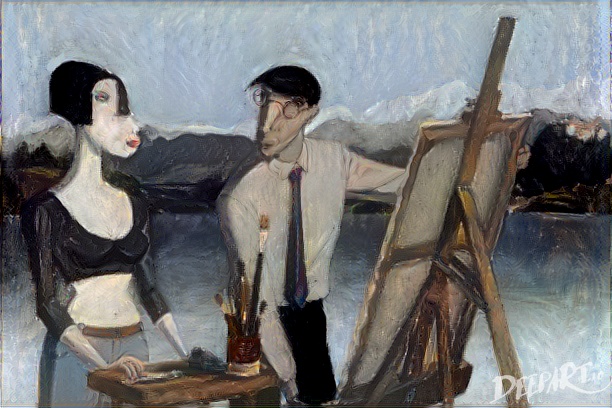
In these two images because of the portrait like portrayal of Mimi and Ruben in the film. By applying the style of Renoir’s Portrait of Frédéric Bazille, the stoic faces of Mimi and Ruben even more reflect those in Renoir’s portrait. Once again, this combination reflects the theme that the characters are pieces of art themselves, even ones who deserve a portrait.
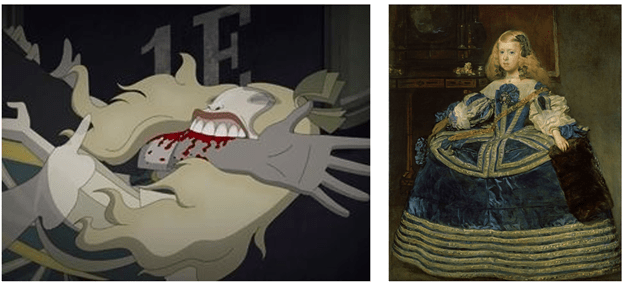
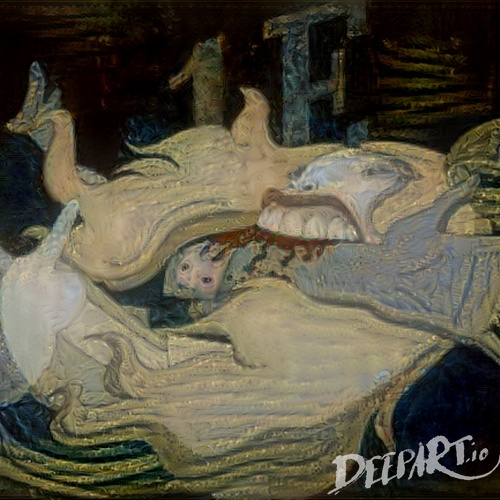
In one of the more shocking sequences of the film, we experience Ruben’s condition for the first hand as the little girl from Diego Velázquez’s Margarita Teresa Infant Woman in Blue Dress sinking her teeth into Ruben’s arm. When I first watched this scene, I would have never guessed this girl was the harmless girl from Velázquez’s portrait. Combining these two images brings to light the contrast between what the real pieces of art display and Ruben’s experiences in his dreams.
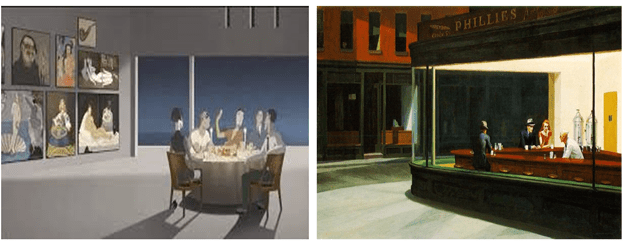
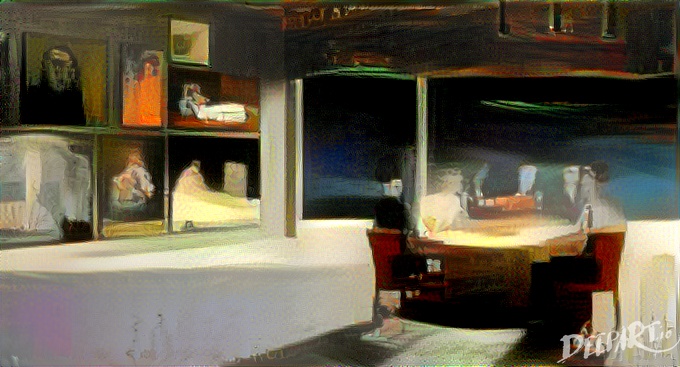
When I first looked at these images side by side their similarities immediately jumped out to me. From the group of people positioned in the right side of the frame seemingly isolated from any other existence, to the framing of the windows and the contrastive lighting I knew these images were the right ones to combine. The resulting image looked to me as if the characters were being teleported to the bar depicted in Edward Hopper’s Nighthawk, as their blurred bodies even look like they are leaning over the bar while Ruben serves them from behind the bar. In addition, the roof above the bar has moved over their heads, even more so creating the feeling that they are in the bar celebrating their triumph after collecting all the paintings behind them.
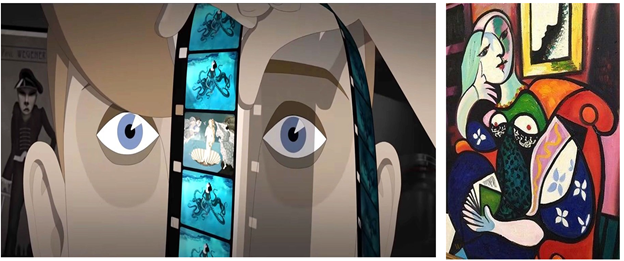
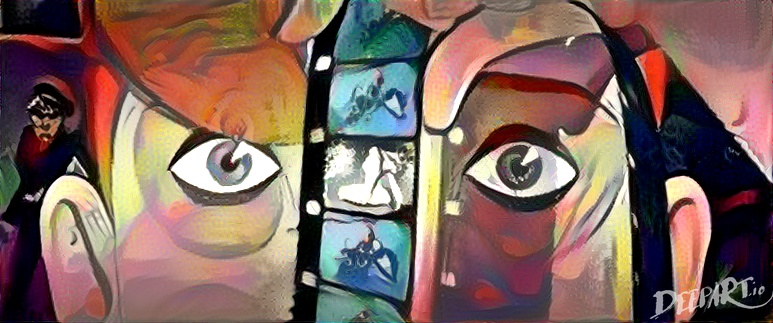
For the final combination, I wanted to put together the image of the detective, Mike, looking at the film and Pablo Picasso’s Woman with Book because of the vibrant colors displayed in both images. Thinking that the bright blue of the film strip would be highlighted in the combination, I was surprised that the resulting image actually brightened the other aspects of the original frame from the film. What jumped out to me most was the shadow on Mike’s face become much more apparent, highlighting a nuance of the shot that may otherwise go unnoticed. Similarly, the painting in the back left pops out as well. Bringing this painting more to the forefront made me realized it is positioned as if it is watching Mike, bringing up the idea that perhaps Ruben is not the only one who is, or who can be, tormented by paintings.

 Budapest through Streets, People and Cinema