Ildikó Enyedi’s My Twentieth Century (1989), set in Europe during its namesake time period, takes the viewer through the childhood and early adulthood of seemingly two different sisters, Dora and Lili. From differences in female behavior and different relationships to the use of black and white film, evidence of a duality exists in almost every aspect of the film. Enyedi uses this theme of contrast to explore two differing, static paths society seems to believe women can take, yet implies that neither one is truly satisfying to those who are on them. A must-see, come in with an open mind and be prepared to reflect.
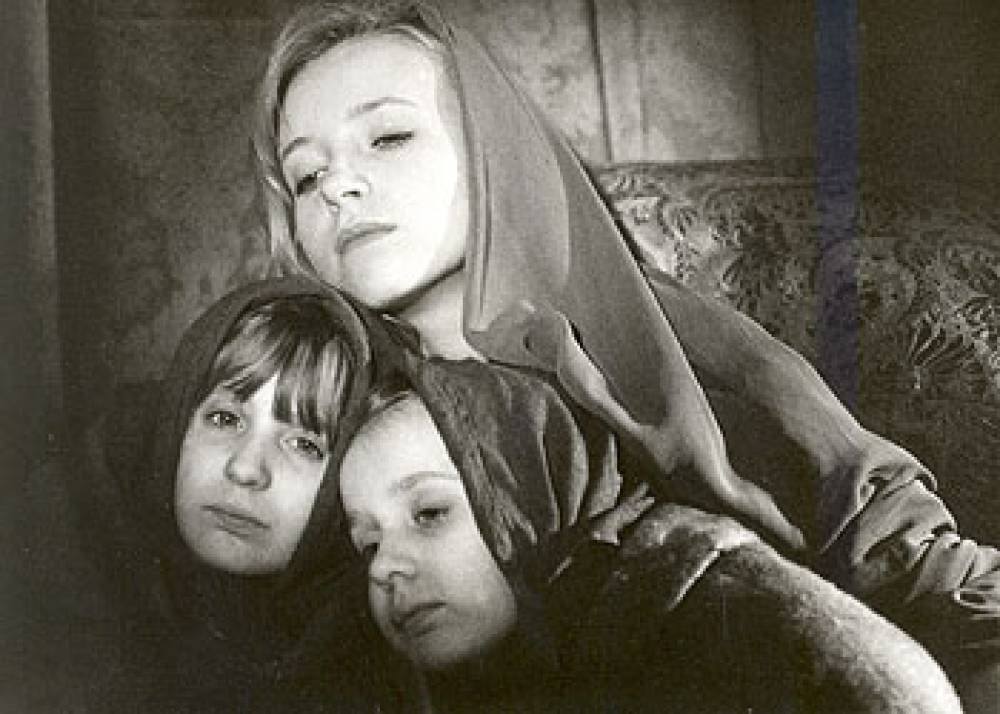
The initial duality begins with casting the two sisters with the same actress. The visual confusion alone primes the audience to be on the lookout for clues to be able to tell them apart, allowing the viewer to be more engaged. The first sister introduced is Dora, a financially stable mistress. She seems to have it all, being the “good” of society and loved by those around her. The second sister, Lili, is a poor terrorist, initially portrayed as evil by societal standards. However, as the film progresses, Enyedi shows that these separate characters are in fact dynamic. She does this through having Dora steal money from one of her men and Lili is unable to follow through with the terrorist plot. Both of these actions surprise the audience, and open our minds beyond our initial expectations of the characters. Dora’s transition from good to evil and Lili’s in the opposite direction serve to inform the audience of the internal conflict within the main characters. Neither is completely static in their role in society. Through the visual duality, Enyedi is able to show that there is more than just one aspect to women and that life is more complicated than just good and evil.
Enyedi’s use of black and white seems to be a nostalgic choice, perhaps meant to take the audience back in time. However, it also serves to amplify the differences between Lili and Dora. In color, the audience could get lost in the display of images. In black and white, the audience relies more on body language and dialogue to determine Lili or Dora. Perhaps this is Enyedi’s intent for choosing the same actress for both twins. In fact, there are several scenes in which I was not entirely sure of which character I was supposed to be seeing. It could be that Enyedi’s purpose was to blur the lines between the two characters, showing the viewer just how deeply entwined the two characters truly are, dropping hints for the later debate of whether they are in fact the same character.
In one of the final scenes, Enyedi uses mirrors to bring the dualities together, occuring after both characters have fully shifted to the opposite of their starting portrayal. For example, Lili just failed to detonate her bomb, a complete contrast to her primary portrayal as a hard-edged terrorist. In the house of mirrors, the two characters are able to see themselves among mirrors. Here, Enyedi gives the audience a choice of deciding whether the two girls are in fact the same character. For those who believe they are different, it is reflective of the belief that women can only be one thing. The other belief that the two characters are in fact the same person comes from the concept that women can be a mixture of different emotions. Cinematically, the house of mirrors is a beautiful way to show that the two characters are the same person. The voiceover of the characters can be seen as an internal dialogue, with the “two” personalities debating who should end up with the man they are in love with. Enyedi also chooses to ensure the man does not hear any of their conversation. Rather, he is oblivious to it. An initial reaction is that Enyedi is implying men are unimportant. However, there is no negative connotation or anger towards the man in that scene, as the girls are fighting over him. He is unaware of the internal conflict that the girl is having within herself or between two characters. Enyedi does this to show how personal a conflict this truly is. The man is not involved. It is up to the woman to decide.
Overall, Enyedi should congratulate herself on creating a fantastic film. Through the casting decisions, black and white portrayal, to the execution of acting and dialogue, all aspects of the film support the other. The messages are not thrown on the audience, but rather gently placed there to be examined in a more neutral manner. Enyedi does not have an agenda with this film, as there is not an outright conclusion. Instead, it seems as though she is making a statement regarding the confusion women feel. Neither is happy acting within the seemingly separate paths women can take. There is an internal struggle between those two paths, but the outer world seems more concerned with other interests. That is, of course, why the movie is called “My” Twentieth Century. Everyone has their own experience in the world.
by Margot Behrens

 Budapest through Streets, People and Cinema