Within the medium of cinema, perspective and the view of the camera are integral aspects to storytelling; as a visual media, cinema relies heavily on showing, rather than telling. However, certain directors may choose to not show certain aspects of the story, which can serve to either heighten or diminish the importance of the invisible aspect. Taika Waititi and László Nemes, directors of Jojo Rabbit and Son of Saul respectively, both use this technique of limiting what is shown on the historical background of the Holocaust, which serves to heighten horror of the atrocities of the Holocaust felt by the audience. For example, both films depict a scene where the main character finds the body of a loved one and refrain from showing the actual death, thus heightening the emotion of the scene.
Jojo Rabbit follows a young German boy, Jojo, as he lives in Berlin and helps his mother hide a Jewish girl in their house. Eventually, Jojo’s mother disappears, and Jojo is left to take care of himself as well as the Jewish girl. In one emotional scene, Jojo is walking around Berlin and finds the body of his mother hanging in a square. Waititi only shows the feet of the mother, which serves to increase the emotion felt by the audience; rather than showing the whole body, Waititi uses restraint to control how the audience reacts to the death.
While Nemes uses a similar technique of limiting the view of the dead, it serves a different purpose within the narrative. Within Son of Saul, Saul is a sonderkommando, a Jewish prisoner forced to help in the extermination of other prisoners, and soon finds the body of who he believes to be his son. Similar to Waititi, Nemes only shows the body in short frames or in passing, limiting the audience view to just Saul. However, these two scenes occur at drastically different points within the narrative, which influences how the audience reacts. In Jojo Rabbit, the mother’s death occurs towards the end of the film, while the boy’s death in Son of Saul is the inciting incident that dictates how Saul behaves the rest of the movie. The placement of the scenes within the narrative does not affect how the scenes dictate the audience emotion, however, as both scenes give the audience a glimpse into the cruelty of the Nazi party and Holocaust.
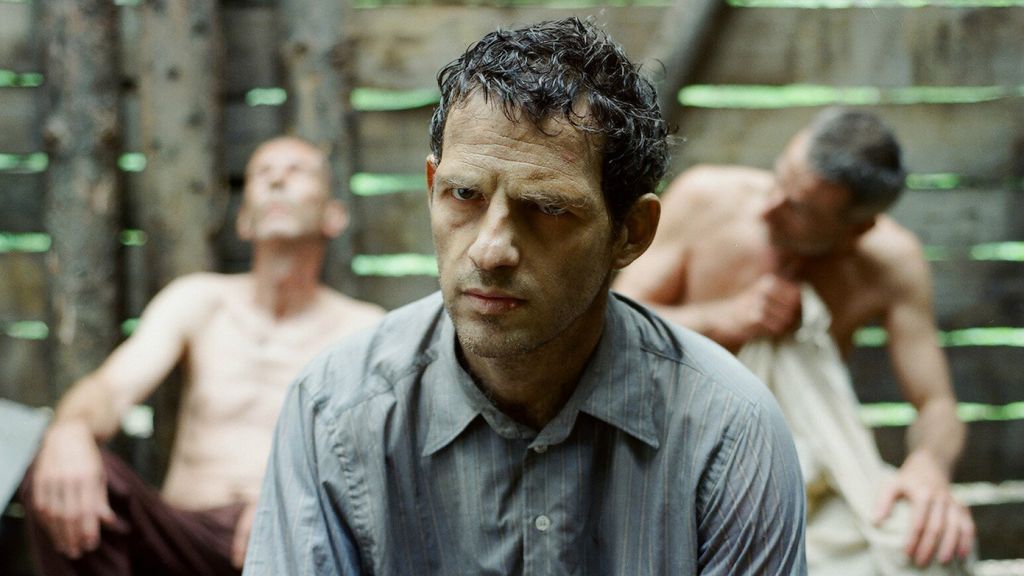
Both Jojo Rabbit and Son of Saul tackle heavy subjects of the Holocaust and Nazi Germany; while they focus on different aspects of these subjects, the techniques used to subtly hint at the suffering of the Jewish people are similar. Rather than outright showing violence and death, the filmmakers opt instead to focus on the living, as well as their reaction to the death around them. This technique, combined with limited visuals of the Jewish suffering, provide a template for how the audience should react, as well as heighten the sense of wrongness towards the cruelty- the focus on the living reminds the audience that the corpses on screen were also humans. Ultimately, both films show an artistic and emotional understanding of cinema and how the audience reacts better when you show less, but make what you show impactful.
by Anna Jones

 Budapest through Streets, People and Cinema