Released in a tumultuous era of radical change and democratic progress, My Twentieth
Century reminisces about the gilded glory of the Austro-Hungarian empire at the turn of the
twentieth century. As viewers follow Lili and Dora from their humble childhood to the glamour
of the Orient Express and finally to their reunion in Budapest, Enyedi highlights the beautiful
memory of Hungary’s ‘prime’ years. Illuminated by the recent lightbulbs and telegraphs, the
Austro-Hungarian empire stood strong as a central world power. As Hungarian audiences in
1989 emerge from decades of Soviet control, we can imagine a longing for this prosperous past.
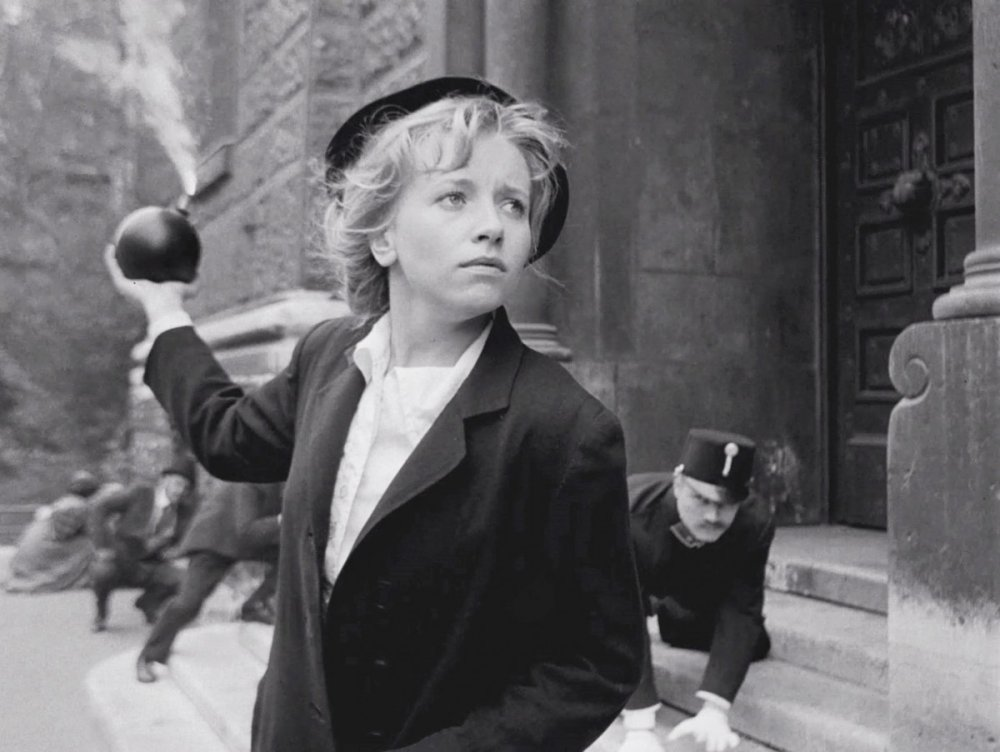
My Twentieth Century follows the journey of two twins, Lili and Dora, from their
separation at birth to their ultimate reunion. Confident and independent, Dora charms the upper
crust of society, drinking fine champagne and manipulating high-class men for her pleasure.
Several coaches behind her on the Orient Express, Lili represents the other side of society: quiet,
poor, and political. Far from the excesses enjoyed by her sister, Lili suffers harsh conditions,
complex moral dilemmas, and a deep sense of powerlessness.
This nostalgic film effectively blends its heroines into one, complex character. Although
Lili and Dora appear on screen as separate entities, distinguishing one from the other challenges
both the audience and the enamored gentleman in pursuit. The combination of real and surreal
elements further extends such ambiguity. The savior donkey and omnipotent stars connect the
sisters in a unique, spiritual manner that extends beyond the typical connection shared by
individual human beings.
The combined character of the two sisters emphasizes both the beauty and struggle of the
gilded era in Austro-Hungary. In opposition to the blind, nationalist longing for the ‘glory days,’
Enyedi challenges viewers to explore the depth of Hungary’s powerful past. With contrasting
shots on the Orient Express and in the differing living accommodations in Budapest, viewers are
forced to reconsider their perception of the ‘good old days.’ As the Hungarian people emerged
from the Iron Curtain, this critical retrospective lens aligned with the prevailing philosophies at
the time.
For a modern audience, My Twentieth Century holds timeless lessons and deep cultural
value. Despite its confusing moments and outdated representations of sexual affairs, the
underlying theme challenges our perception of the past to not only remember the wonderful
advances, but also the pervasive struggling of the proletariat. Far from a communist cry, My
Twentieth Century compels viewers to think critically for themselves as Hungary entered a new
age.
Today, prominent populist politicians across the globe call for a return to the past glory of
the state. Popularized by Donald Trump, a former American President, the idea of making a
country ‘great again’ rests upon an idealized image of the past. Too often, modern scholarship
shares this gilded view in its representation of the mid-twentieth century in the United States, or
the turn of the twentieth century in Austro-Hungary. History books shape collective opinion into
a loving recollection of the past. Although both eras represented times of great global
prominence and economic expansion for the United States and Hungary, respectively, none of
this progress was universally enjoyed; however, contemporary scholarship often omits this
crucial detail. The duality of the combined main character in My Twentieth Century reminds the
modern audience of this reality. As countries around the globe suffer from selective recollections
of history, works of art can anchor our perception of the past to reality. Despite its release
decades ago, My Twentieth Century is a must-watch for the modern audience.
Directed by Ildikó Enyedi
Released in 1989
by Noah Fehr

 Budapest through Streets, People and Cinema