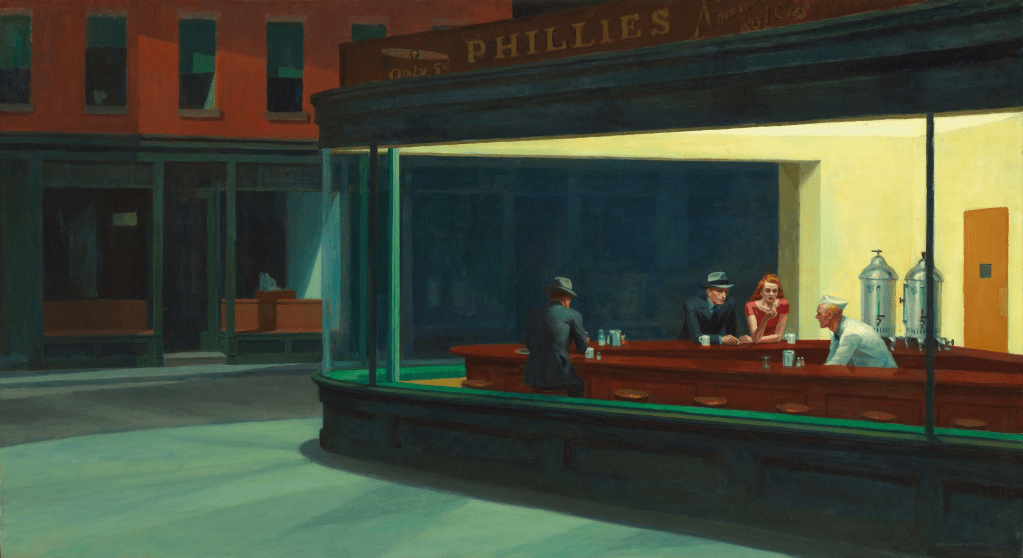
Edward Hopper’s 1942 painting Nighthawks is an iconic piece of American art, currently
housed in the Art Institute of Chicago, and one of the paintings referenced in the movie Ruben
Brandt, Collector. Within the film, the painting is shown as the background as Dr. Ruben Brandt
walks alone down a street. Here the painting is not a piece of art, but as part of the “reality”
within the film, as it depicts a fairly normal scene of customers at a diner. As Nighthawks is a
very well known piece, it has been referenced in several other contexts ranging from other
paintings to its direct inclusion in film and television.
Paintings
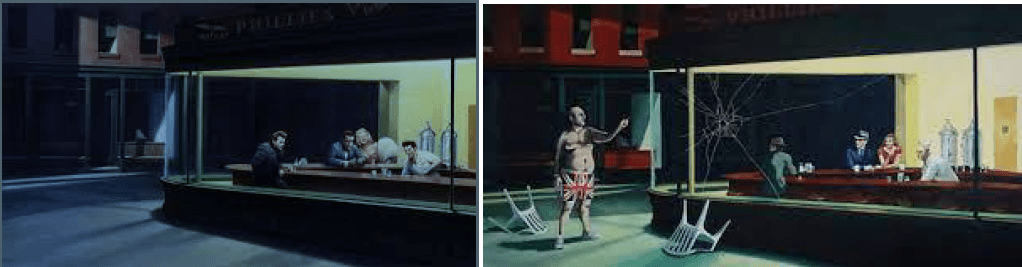
Nighthawks inspired several other paintings, often just as recreations of the original with the
diner patrons swapped out. One specific example is Goffried Helnwein’s Boulevard of Broken
Dreams, in which the painting is pretty much identical except the people are Humphrey Bogard,
James Dean, Marylin Monroe, and Elvis Presley. There is also a Banksy parody that shows the
same scene, except with a man standing outside the diner with a smashed window.
Poetry
German author Wolf Wondratschek wrote a poem titled “Nighthawks: After Edward Hopper’s
Painting”, which describes what he imagines to be the backstory of the patrons in the diner.
American author Joyce Carol also wrote a piece inspired by Nighthawks titled “Edward Hopper’s
Nighthawks, 1942” in which she describes the inner thoughts of the people depicted in the
painting. These are only two specific examples of literature inspired by Hopper’s painting, as
there are several others with less direct references to the original.
Film and Television
The painting is used to inspire the background in several instances in film, similar to the way it is used in Ruben Brandt, Collector. It is the background for a scene in two separate films Heavy Traffic and Glengarry Glen Ross. Nighthawks has also been said to influence the style of film noir, which was popular in the 1940s and 1950s in American film. The painting is shown coming to life in Night at the Museum: Battle of the Smithsonian, except it was not exhibited at
the Smithsonian at that time.
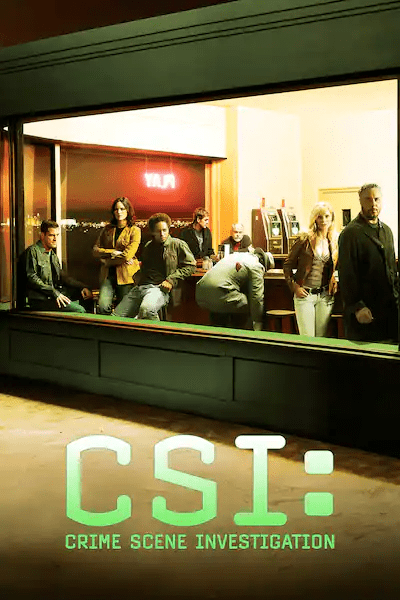
The painting has also been in several instances of television, such as being referenced in episodes within CSI: Crime Scene Investigation, Shameless, and The Simpsons. In these episodes, the characters within the show are seen in a similar diner and the same angle as in Nighthawks.
by Catey Aitken

 Budapest through Streets, People and Cinema