In his review, Zhihan Chen discusses one of the great surprises of recent Hungarian filmmaking, Larry by Szilárd Bernáth. This poignant drama unravels the story of a young shepherd from Northeast Hungary with a heavy stutter and a messy family who enters a talent show to break out of poverty and hopelessness.
Larry is a 2022 film made by Hungarian filmmaker Bernáth Szilárd, telling the tale of Ádám, a young man from the Hungarian countryside, and his escape from his current life. Ádám is 21 years old and has a severe speech impediment; he has an intense stutter and communication is extremely difficult for him. However, that stutter disappears when he is rapping alone. He currently works at a farm tending sheep, and it seems that his future life will also be just like this. His father dreams of opening up a livestock farm with his son and incorporates Ádám into his plans without any regard for what he wants. It is later revealed that Ádám’s father was an alcoholic and was abusive to Ádám as a child though he has spent many years sober and mostly changed for the better. Ádám hears about a talent show in Budapest, where the winner of the talent show will win prize money, a car, as well as a chance to perform at a music festival. He seeks out CsalaDo, a music producer, and enters the talent show with him. Throughout the film, Ádám finds support in his new relationships with CsalaDo and his Roma friends, as well as Noémi, his father’s girlfriend. Although Ádám does not win the talent show in the end, he is happier than he ever was. Larry is a viscerally moving and emotional film, not shying away from scenes of violence and extreme vulnerability. At its core, Larry is not a film about achieving great wealth or success, but rather about Ádám and his journey escaping from his trauma and current life.
Throughout the film, the most common camera shots used were over-the-shoulder shots, and close and medium shots. These are conscious choices made by the director and brings the audience into the world of Ádám. When characters are walking side by side, it feels as if the audience is walking right behind them. When characters are sitting and talking, the audience has a seat right next to them. The faces and emotions of the characters are clearly visible, which serves to make the film about the personal story of Ádám. Using shots from longer ranges and wider perspectives bring more focus onto the events themselves as opposed to the characters and their complexity. Even in the scene of the talent show performance, one of the major moments that the film builds tension and suspense towards, the focus is never on how big or grand the venue is nor about the judges’ decisions. In fact, the audience only sees the venue as a background while the camera revolves around Ádám throughout his performance. Even when the judges were delivering their verdicts, the camera was mostly focused on Ádám’s face as he listens. The audience is with Ádám throughout the whole film, and they are fully immersed in the situations he finds himself in, his thoughts and feelings, and his dreams.
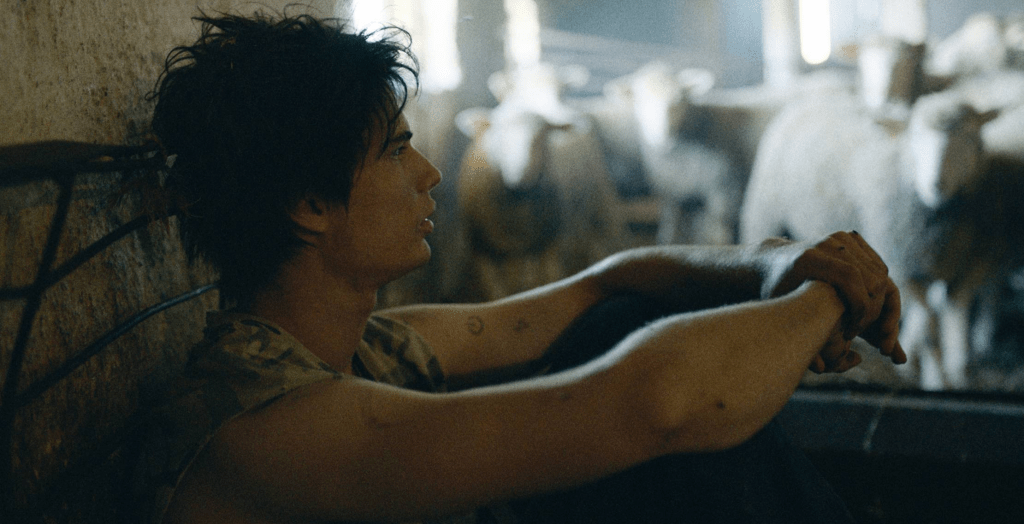
Some prominent and unmistakable emotions that are conveyed to the audience throughout the film are Ádám’s feelings of frustration, disappointment, and fiery rage. There are three main sources his anger and negative feelings are directed at: his father, his life, and himself. When the audience hears Ádám’s rap lyrics first time, they may notice that it is dark and violent, but does not understand the real reason why. Perhaps it is young adult angst, or if the audience is observant, they may attribute it to his potentially hopeless future where he lives out the rest of his life tending sheep. However, midway through the film, the audience learns that Ádám’s father was an alcoholic and severely abused Ádám when he was young. This is the real source of inspiration for Ádám’s horrific lyrics. While Ádám’s father may have sworn off drinking, the urges have never disappeared. His violent tendencies and anger issues can be seen during the soccer match with his son, and later, when he finds out his son no longer wants to run a livestock business with him. The second reason for Ádám’s rage is his current living situation. Ádám lives in the Hungarian countryside, and at the start of the movie, he works as a laborer on a farm tending sheep. He gives most of his wages to his father, and only manages to save very little for himself. It does not look like he has any close friends, and he spends most of his free time writing rap lyrics alone. As far as he can tell, his only future lies in opening a livestock business with his father. This is not the future that he wants, and there are no other practical options for him. Lastly, Ádám is deeply frustrated with himself due to his stutter. His speech impediment makes him lose confidence in basic interactions, such as ordering a bus ticket, as well as prevents him from being able to stand up for himself, such as the unfair incident of the lady hitting one of his sheep in the beginning of the movie. Above all else, his speech impediment stops him from realizing his full potential as a rapper. Since his better future (financial independence, leaving his father and the countryside, and freedom) depends on a successful performance at the talent show, Ádám’s stutter gets in his way more than ever.
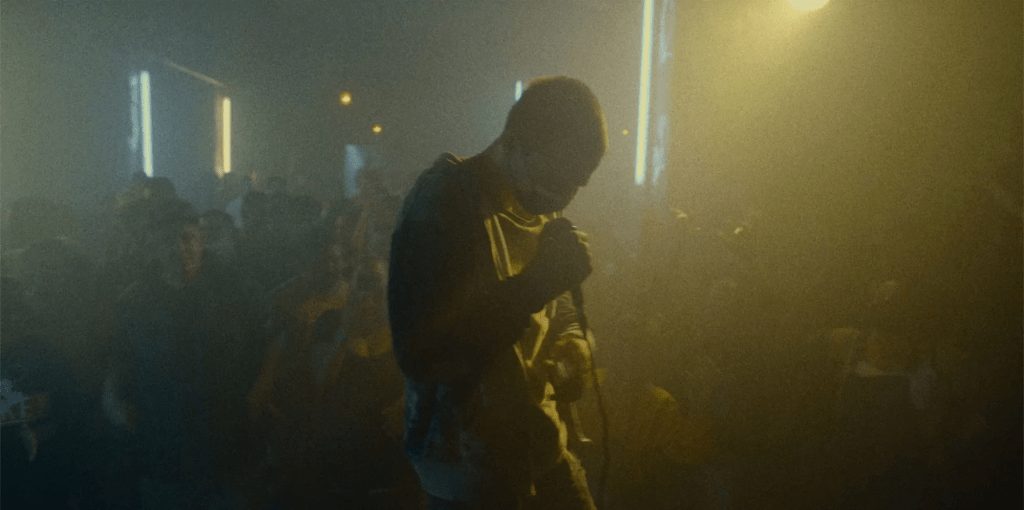
Unfortunately for audience members who watch films for obvious feel-good endings or success stories, Larry’s ending is not noticeably happy. Ádám does not win the talent show, and in the final scene, he and CsalaDo are seen begging people for money to return home from Budapest. While that may sound depressing, both characters are fairly upbeat and cheerful. CsalaDo is complaining about the rudeness of people living in Budapest and playfully making fun of Ádám’s stutter. Ádám does not take offense, and in fact, laughs along with CsalaDo’s jokes. They walk along the train station, and the camera pans to the train car spray painted with “Larry,” Ádám’s stage name. The screen then cuts to the end credits. While Ádám may not have achieved monetary success or fame at the end of the film, he accomplished something even more significant. He stood up to his father, have successfully proven that he is capable of something other than tending sheep for a living, found people who accepts him for who he is (stutter and all), and now knows that there are other possibilities out there for himself. Larry was never about making it big as a musician and achieving massive success. It is a much more intimate and personal story about a young man’s struggles in life and overcoming them. Upon understanding this point, the audience may see that the ending is indeed cathartic and satisfying. Although he is not rich and famous, Ádám does succeed in overcoming many of the bonds that were holding him back and manages to break free in the end.
by Zhihan Chen

 Budapest through Streets, People and Cinema