Diyaa Yaqub’s essay analyses one of the most perplexing scenes in Ildikó Enyedi’s movie.
Ildiko Enyedi’s My Twentieth Century is a must-watch. Each of the themes explored are set up diametrically opposed to each other. As it follows the Orient Express, we hear about the contrasts between the East and West in conversations. The Orient Express symbolically and literally, bridges them and complicates the binary, despite them being spoken as the ‘other’ and being exoticised by passengers on the train. Similarly, we see contrasts of wealth and poverty, through the main protagonists, Dora and Lili, and the shots going back and forth between the two carriages on the train. The one with Dora is lavish, people are dressed up, and conversations are flowing as they drink around a table. The carriage with Lili has people crammed in a much smaller space. Other contrasts include the sudden shifting in focus to animals on the screen, to explore contrasts between human and nonhuman; Enyedi pulls out nuances and breaks this binary through including stories and emotional dialogue from the animals; we see them as being perceived and perceiving. We consistently reinforce the rigid categories we use to understand the world. Enyedi expertly makes us confront these categories. The film makes you stop, reflect, laugh, and reminds us of the complexities in our world.
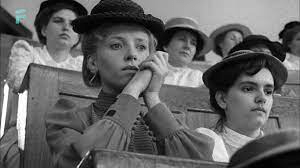
Through this exploration of contrasts, and breaking linearity within the film, a concept that is especially clear is Enyedi’s call for a nuanced understanding of womanhood and female empowerment. A particularly memorable part of the film is Otto Weninger’s lecture. To the modern viewer, the lines within the lecture are absurdly extreme. The confrontational, and shocking lines of the lecture allude to many parts of the film, and can be used to unpack some of the more subtle images Enyedi portrays through Dora and Lili.
“Women should be beings capable of thinking in a logical fashion, to be able to follow my train of thoughts. They must have moral acumen. They have neither.” After this line is mentioned by Weninger, the screen shifts to an image of Lili’s face portraying anger, hurt, and frustration. In many ways, Lili’s personality in the film is dependent on this ‘moral acumen’. Lili is on a mission, based on her strong and un-moving values of what she believes is right/moral, and the film shows that she will follow the steps necessary to complete this and use the bomb to kill the minister. There are moments in the film, where Lili is portrayed as this incredibly logical and scientific character. We see a shot of her reciting materials, and their quantities, in an attempt to memorise them. For much of the film, Lili is a rigid character, with tense body language, whose smiles are small and rare. All of her movements seem to contribute to this end goal with the bomb, making it easy to ‘follow her train of thoughts’.
Dora’s logic, however, seems hard to follow. She is unexpected, impulsive, and her body language is free and loose. Dora is often drinking, something that is usually associated with the inhibited logical reasoning. On the surface she could be the opposite of logic, but we also watch as she manipulates the people around her and constantly gets what she wants. She lives a lavish lifestyle as a drifter, and seemingly does so with ease. She steals, she lives a life amongst the wealthy, and consistently has little goals that she always manages to complete. Someone without logic, could never do so. In many ways, Dora’s character makes you question whether she is the more logical twin? Lili is so unmoving about her principles, that it could take her to dreams and ideals far from reality.
“A woman’s being dissolves with sexuality.” Enyedi does an amazing job at bringing sexuality to the forefront of these womens’ lives, while communicating a complex view of female empowerment. The twins are connected through their sexuality, as both of them are interested in Z.
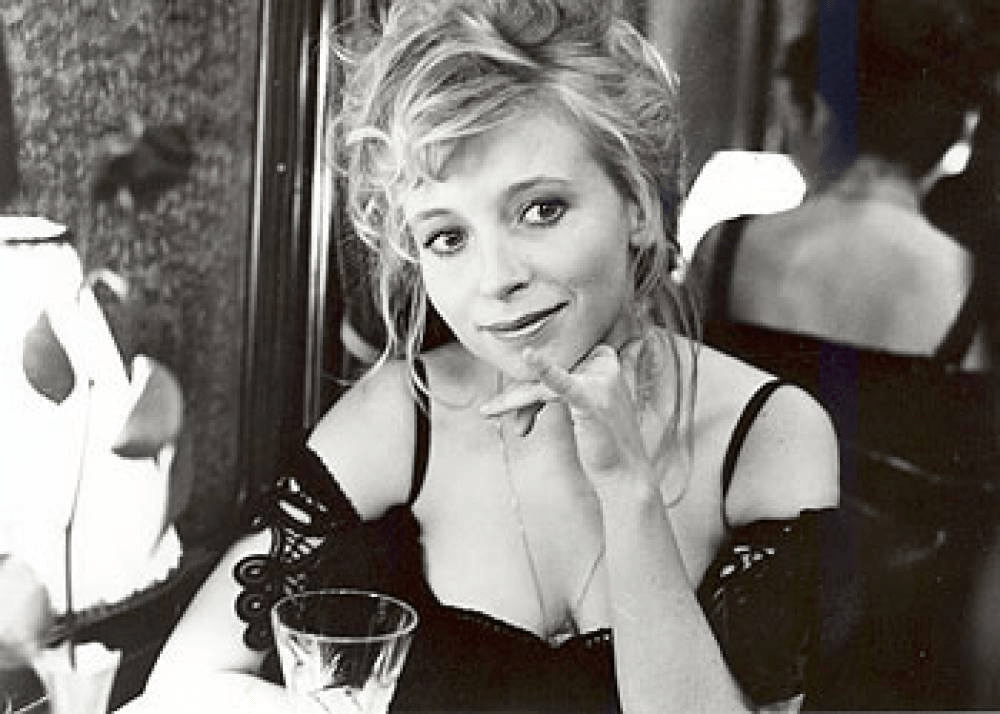
We see that Dora is somewhat characterised by her sexuality. As we try to tell the difference between Dora, and Lili, Dora’s expression of sexuality helps us. If it is such a distinct part of her, it is part of her distinct being. How can sexuality dissolve her being if it helps us understand and see her as a person? We watch Lili wrestle with this comment. Right after the lecture, there is a scene of Lili and Z flirting and walking. He kisses her, and she pulls away and slaps him almost immediately. We see her reluctance to express desire, potentially in fear of what this would do to her sense of empowerment. Lili is not willing to be ‘dissolved’. Through both characters, we see how sexuality is expressed and used. Is Dora being empowered with sexuality? Can Lili’s being be empowered by it, or does refusing it allow her to keep her sense of ‘being’? It’s also fascinating to see how after Lili slaps him, she asks him to help her get over the wall, because she can’t do it on her own. This moment calls the reader to question what is in her reach, what is in her power, and how does her sexuality inhibit or encourage it?
“A woman is directionless, neither good nor bad.” – This was an interesting line since much of the movie is centred around the Orient Express, travelling in a certain direction. Dora hops on and off the train, flirts with various people, and it almost seems as if she has no plan. She portrays the stereotype of being ‘directionless’. However, the idea of Dora being ‘directionless’ is pushed back on as we follow Lili’s journey. We see how Lili changing her physical and symbolic direction can be a source of empowerment. Does this mean Dora’s lack of direction is a form of empowerment? Lili, at the end of the movie, is ready to use the bomb. At the last minute, as she’s about to throw it, she turns around and changes direction. Despite the fact that she had this mission, and passion for it, she changed her mind. Throughout the movie, she stuck to her principles and was convinced that she was following her morals. However, as she turns around, she saves many lives. In the lecture, Weininger calls being directionless neither bad nor good. However, Dora and Lili help the audience understand the power that lies in being in between the ‘bad’ and ‘good’. The power that a woman can straddle in the in-between.
“Man is committed to logic whereas a woman is not.” – Enyedi highlights the irony in this statement through the portrayal of Z, one of the main characters in the film. This ‘logical’ man, attracted to both Lili and Dora, is unable to tell them apart. His attraction to them, blinds him to the differences between them. We see how derogatory this can be as he reduces them into one. After he sleeps with Dora on the train, his wallet is stolen. When he meets Lili after it, he treats her with entitlement and orders her around. He will barely make eye contact with her despite them sharing a moment of intimacy. Although this can be attributed to the fact that he felt disrespected by Dora, he is able to reduce Lili to a sexual object; if he was so disrespected, he could have always walked away from Lili instead of initiating this moment. Before this intimate moment between Lili and Z, he had asked Lili to let go of some of her ‘principles’ in another scene, suggesting she is too strong-headed and idealistic. Lili’s choice to sleep with him, loosening these ‘principles’ can be seen as powerful, but we also see the difficulty and inhibition of her power because of how a man (logical or not) perceives her.
At the end of the film, we see both Lili and Dora in a room with mirrors. When Z thought they were the same people, it reduced them. When they walk in, see each other, versions of themselves reflected back, the viewer is forced to question whether they were always the same person. A woman can’t be seen in only one light and within one stereotype. Seeing them as one person, can mean completely different things. Lili and Dora’s contrasting expressions of themselves, being seen as one, only demonstrates the holistic experience of womanhood. The ambiguity, and the power in the in-betweenness that is created as Lili and Dora merge, is a reminder for all of us to look beyond the categories that we create, because power often lies beyond them.
by Diyaa Jaqub

 Budapest through Streets, People and Cinema